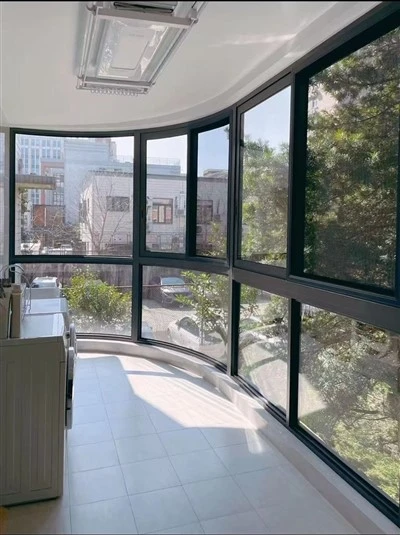
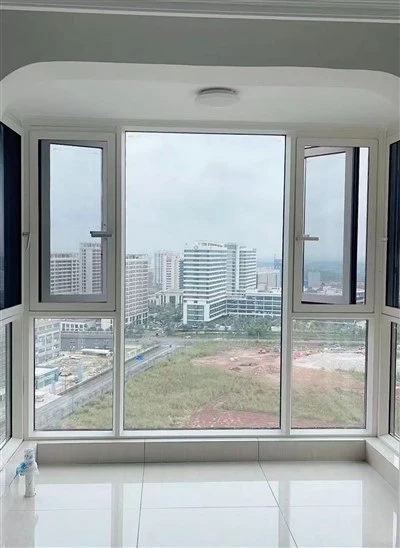
As a supplier of curtain walls for high - rise buildings, I've witnessed firsthand the growing demand for energy - saving solutions in today's construction industry. With buildings accounting for a significant portion of global energy consumption, the proper design and implementation of curtain walls can play a pivotal role in reducing a building's energy footprint. In this blog, I'll explore several energy - saving strategies for curtain walls in high - rise buildings.
1. Material Selection
The choice of materials for curtain walls can have a profound impact on energy efficiency.
Glass Selection
Glass is one of the most common materials used in curtain walls. Low - emissivity (low - e) glass is an excellent choice for energy - saving. Low - e glass has a thin metallic coating that reflects infrared radiation while allowing visible light to pass through. This means that it can reduce heat gain in the summer by reflecting the sun's heat, and also reduce heat loss in the winter by keeping the indoor heat inside. For example, double - glazed or triple - glazed low - e glass units can significantly improve the insulation performance of curtain walls. The multiple layers of glass with insulating gas (such as argon) between them create a thermal barrier, which further reduces heat transfer.
Frame Materials
Aluminum is a popular frame material for curtain walls due to its strength, durability, and aesthetic appeal. However, traditional aluminum frames can be poor insulators. To address this issue, thermal - break aluminum frames are often used. A thermal break is a non - conductive material (such as polyamide) inserted into the aluminum frame, which disrupts the heat flow through the frame. This helps to prevent the transfer of heat between the interior and exterior of the building, improving the overall energy efficiency of the curtain wall. Additionally, alternative materials like fiberglass or vinyl can also be considered for frames, as they have better insulating properties compared to aluminum. Fiberglass has a low thermal conductivity and is strong, while vinyl is also an affordable and energy - efficient option.
2. Design Optimization
The design of curtain walls can be optimized to enhance energy efficiency.
Orientation
The orientation of the curtain wall in relation to the sun is crucial. In the Northern Hemisphere, south - facing curtain walls can be designed to maximize solar gain in the winter, while minimizing it in the summer. For example, large, unshaded south - facing windows can allow sunlight to enter the building during the cold months, providing natural heating. On the other hand, east - and west - facing curtain walls should be designed to reduce solar heat gain, as they receive direct sunlight during the early morning and late afternoon when the sun's rays are more intense. This can be achieved through the use of shading devices or by reducing the window - to - wall ratio on these facades.
Window - to - Wall Ratio (WWR)
The WWR is the ratio of the area of windows to the total area of the wall. A lower WWR generally means better energy efficiency, as windows are typically less insulating than solid wall materials. However, a very low WWR may also reduce natural light and ventilation, which can have a negative impact on the indoor environment. Therefore, it's important to find the right balance. In high - rise buildings, a WWR of around 30% - 50% is often considered a reasonable compromise, depending on the climate and building function. For example, in a commercial office building, a slightly higher WWR may be acceptable to provide more natural light for the occupants, as long as proper energy - saving measures are in place.
Shading Devices
External shading devices, such as overhangs, louvers, and sunscreens, can be very effective in reducing solar heat gain. Overhangs are horizontal projections above windows that block the sun's rays during the summer when the sun is high in the sky. Louvers are adjustable or fixed slats that can be angled to control the amount of sunlight entering the building. Sunscreens can be made of various materials, such as fabric or metal, and can be deployed or retracted as needed. Internal shading devices, such as blinds or curtains, can also be used, but they are generally less effective than external shading devices because they do not prevent the solar radiation from hitting the glass in the first place. For instance, in a high - rise building located in a hot climate, well - designed external louvers can reduce the cooling load by up to 20%.
3. Ventilation Design
Proper ventilation is essential for maintaining a comfortable indoor environment and reducing energy consumption.


Natural Ventilation
Curtain walls can be designed to incorporate features for natural ventilation. Operable windows or vents can be installed to allow fresh air to enter the building and stale air to exit. This can help to reduce the need for mechanical ventilation systems, which consume a significant amount of energy. For example, in a high - rise residential building, operable windows on the facade can be opened during the mild seasons to provide cross - ventilation, improving indoor air quality and reducing energy use. Additionally, stack ventilation can be utilized in curtain wall design. Stack ventilation takes advantage of the difference in air density between the warm indoor air and the cooler outdoor air. By creating vents at different heights in the building, the warm air rises and exits through the upper vents, while fresh air is drawn in through the lower vents.
Mixed - Mode Ventilation
Mixed - mode ventilation combines natural ventilation with mechanical ventilation. During favorable weather conditions, natural ventilation is used to cool and ventilate the building. When the outdoor conditions are not suitable (such as during extreme heat or cold), mechanical ventilation systems are activated. This approach can provide a more flexible and energy - efficient solution for high - rise buildings. For example, a high - rise office building can use natural ventilation during the spring and fall seasons, and switch to mechanical ventilation during the summer and winter.
4. Incorporating Renewable Energy Sources
In addition to traditional energy - saving measures, curtain walls can be designed to incorporate renewable energy sources.
Building - Integrated Photovoltaics (BIPV)
BIPV involves integrating photovoltaic cells into the curtain wall system. These cells can convert sunlight into electricity, which can be used to power the building's electrical systems. BIPV can be in the form of photovoltaic glasses or panels that replace traditional glass elements in the curtain wall. For example, in a large high - rise commercial building, a curtain wall with BIPV can generate a significant amount of electricity, reducing the building's reliance on the grid. The electricity generated can be used for lighting, powering small appliances, or even charging electric vehicles in the building's parking lot.
Solar Thermal Systems
Solar thermal systems can also be integrated into curtain walls. These systems use the sun's energy to heat water or a heat - transfer fluid, which can then be used for space heating, domestic hot water, or other purposes. For instance, a solar thermal collector can be incorporated into the curtain wall design, and the heated fluid can be circulated through a heat exchanger to provide hot water for the building.
The Role of Our Company
As a supplier of [link text="Curtain Wall Architecture" href="/building-curtain-wall/curtain-wall-architecture.html"]curtain wall architecture[/link] for high - rise buildings, we understand the importance of energy - saving strategies. We offer a wide range of products, including [link text="Curved Curtain Wall" href="/building-curtain-wall/curved-curtain-wall.html"]curved curtain walls[/link], [link text="House Curtain Wall" href="/building-curtain-wall/house-curtain-wall.html"]house curtain walls[/link], [link text="Building Curtain Wall" href="/building-curtain-wall/building-curtain-wal.html"]building curtain walls[/link], and [link text="Glass Curtain Walling" href="/building-curtain-wall/glass-curtain-walling.html"]glass curtain walling[/link], all designed with energy efficiency in mind.
Our team of experts can work closely with architects, engineers, and developers to design and install curtain wall systems that meet the specific energy - saving requirements of each project. We use the latest materials and technologies to ensure that our curtain walls not only provide excellent energy performance but also enhance the aesthetic appeal of the building.
If you are involved in a high - rise building project and are looking for energy - efficient curtain wall solutions, we invite you to contact us for a consultation. Our experienced staff can provide detailed information about our products and services, and help you find the best curtain wall solution for your project.
References
-ASHRAE Handbook—Fundamentals. American Society of Heating, Refrigerating and Air - Conditioning Engineers.
-International Energy Agency. (2022). Energy Efficiency in Buildings.
-Kreith, F., & Sonju, S. (2018). Principles of Energy Efficiency and Renewable Energy. Cengage Learning.